Latest Articles

Oil Markets Under Pressure: Expanding Supply Outlook Sends Global Crude Lower
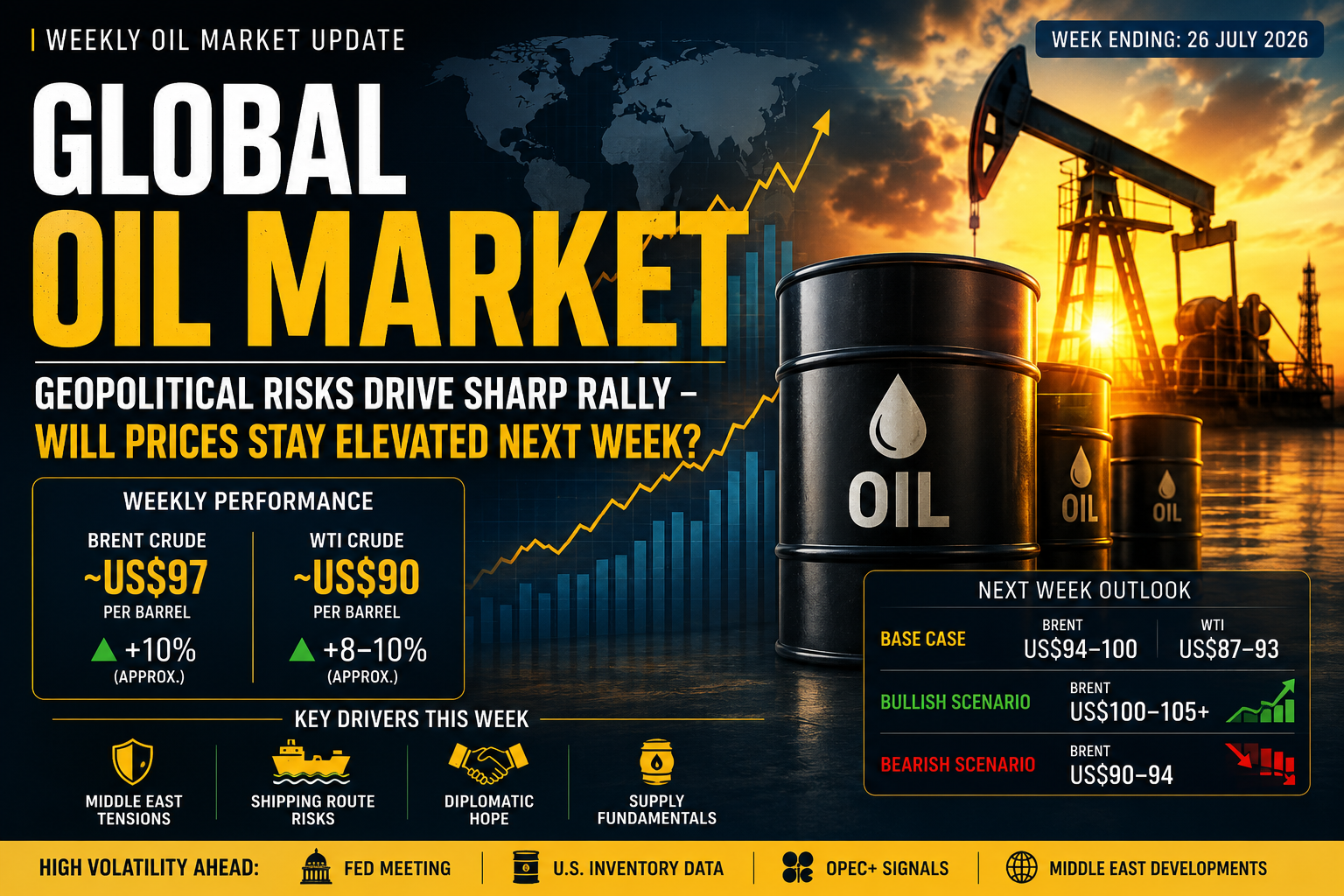
Global oil markets experienced one of their most volatile weeks of the year as escalating geopolitical tensions in the Middle East sent crude prices sharply higher before profit-taking and renewed diplomatic efforts trimmed gains toward the end of the week. Despite Friday’s pullback, both Brent and West Texas Intermediate (WTI) crude posted strong weekly gains, highlighting the market’s concern over potential supply disruptions.
The coming week is expected to remain highly volatile, with traders closely monitoring geopolitical developments, central bank decisions, U.S. inventory data, and OPEC+ production signals.
Weekly Oil Price Performance
Benchmark Weekly Close Weekly Change Brent Crude Around US$97 per barrel +10% (approx.) WTI Crude Around US$90 per barrel +8–10% (approx.) Brent briefly traded above US$100 per barrel during the week before retreating after reports of possible renewed diplomatic talks between the United States and Iran.
Major Drivers Behind This Week’s Price Rally
1. Middle East Geopolitical Tensions
The dominant factor throughout the week was renewed military escalation involving:
- United States and Iran
- Houthi attacks on oil tankers
- Security concerns around the Red Sea
- Continued uncertainty surrounding shipping through the Strait of Hormuz
These developments increased fears of disruptions to one of the world’s most important oil transport routes, forcing traders to price in a significant geopolitical risk premium.
2. Shipping Route Risks
Although oil continued to flow through the Strait of Hormuz, vessel traffic remained below normal levels.
Markets remain concerned that any significant disruption could remove millions of barrels per day from global supply.
The uncertainty surrounding maritime logistics was enough to support prices throughout the week despite no major production outage occurring.
3. Diplomatic Hopes Triggered Friday Sell-Off
Toward the end of the week, reports emerged that China was encouraging renewed negotiations between the United States and Iran.
This reduced immediate fears of supply disruption and prompted traders to lock in profits.
As a result:
- Brent fell nearly 4% on Friday
- WTI also declined sharply
Nevertheless, both benchmarks still recorded impressive weekly gains.
4. Supply Fundamentals
Beyond geopolitics, the market continues to monitor:
- OPEC+ production policy
- Kazakhstan’s reduced output
- U.S. drilling activity
- Global inventory levels
The International Energy Agency (IEA) expects global oil demand to recover later this year while forecasting a gradual improvement in consumption after earlier weakness.
Factors to Watch Next Week
Several events could determine the market’s direction:
Federal Reserve Meeting
Interest rate decisions and guidance from the U.S. Federal Reserve could influence:
- US dollar strength
- Economic growth expectations
- Oil demand outlook
Higher interest rates generally pressure commodity prices by strengthening the dollar and slowing economic activity.
U.S. Crude Inventory Report
The weekly Energy Information Administration (EIA) inventory report will indicate whether:
- inventories are tightening (bullish)
- stockpiles are building (bearish)
OPEC+ Signals
Markets remain sensitive to any indication regarding:
- production increases
- production discipline
- compliance among member countries
Middle East Developments
This remains the largest market risk.
Any escalation involving:
- Strait of Hormuz
- Red Sea shipping
- Iran
- Saudi Arabia
could rapidly lift oil prices.
Conversely, progress toward a ceasefire or negotiations could reduce the geopolitical premium.
Price Forecast for Next Week
Base Case (Most Likely)
Brent Crude: US$94–100 per barrel
WTI Crude: US$87–93 per barrel
Markets are likely to remain volatile but supported by ongoing geopolitical uncertainty.
Bullish Scenario
If:
- shipping disruptions worsen,
- military conflict intensifies,
- or major supply interruptions occur,
Brent could revisit or exceed US$100–105 per barrel.
Bearish Scenario
If:
- diplomatic negotiations advance,
- supply concerns ease,
- or OPEC+ signals higher production,
Brent could retreat toward US$90–94 per barrel.
Impact on the Global Economy
Higher oil prices may have several consequences:
- Increased fuel costs for consumers
- Higher transportation expenses
- Rising inflationary pressures
- Greater costs for airlines and shipping companies
- Potential pressure on central banks to maintain tighter monetary policy
Oil-importing countries are particularly vulnerable to sustained high prices, while major oil exporters may benefit from increased export revenues.
Outlook
The oil market enters the new week with a strong geopolitical risk premium but heightened uncertainty. Traders will closely follow developments in the Middle East, the U.S. Federal Reserve’s policy decisions, inventory data, and OPEC+ commentary.
Unless geopolitical tensions ease significantly, crude prices are likely to remain elevated and highly volatile. While diplomatic progress could trigger a short-term correction, any disruption to key shipping routes or production facilities may quickly push prices back toward the US$100 per barrel level for Brent crude.
Oil Markets Under Pressure: Expanding Supply Outlook Sends Global Crude Lower
Global oil markets experienced one of their most volatile weeks of the year as escalating geopolitical tensions in the Middle East sent crude prices sharply higher before profit-taking and renewed diplomatic efforts trimmed gains toward the end of the week. Despite Friday’s pullback, both Brent and West Texas Intermediate (WTI) crude posted strong weekly gains, highlighting the market’s concern over potential supply disruptions.
The coming week is expected to remain highly volatile, with traders closely monitoring geopolitical developments, central bank decisions, U.S. inventory data, and OPEC+ production signals.
Weekly Oil Price Performance
Benchmark Weekly Close Weekly Change Brent Crude Around US$97 per barrel +10% (approx.) WTI Crude Around US$90 per barrel +8–10% (approx.) Brent briefly traded above US$100 per barrel during the week before retreating after reports of possible renewed diplomatic talks between the United States and Iran.
Major Drivers Behind This Week’s Price Rally
1. Middle East Geopolitical Tensions
The dominant factor throughout the week was renewed military escalation involving:
- United States and Iran
- Houthi attacks on oil tankers
- Security concerns around the Red Sea
- Continued uncertainty surrounding shipping through the Strait of Hormuz
These developments increased fears of disruptions to one of the world’s most important oil transport routes, forcing traders to price in a significant geopolitical risk premium.
2. Shipping Route Risks
Although oil continued to flow through the Strait of Hormuz, vessel traffic remained below normal levels.
Markets remain concerned that any significant disruption could remove millions of barrels per day from global supply.
The uncertainty surrounding maritime logistics was enough to support prices throughout the week despite no major production outage occurring.
3. Diplomatic Hopes Triggered Friday Sell-Off
Toward the end of the week, reports emerged that China was encouraging renewed negotiations between the United States and Iran.
This reduced immediate fears of supply disruption and prompted traders to lock in profits.
As a result:
- Brent fell nearly 4% on Friday
- WTI also declined sharply
Nevertheless, both benchmarks still recorded impressive weekly gains.
4. Supply Fundamentals
Beyond geopolitics, the market continues to monitor:
- OPEC+ production policy
- Kazakhstan’s reduced output
- U.S. drilling activity
- Global inventory levels
The International Energy Agency (IEA) expects global oil demand to recover later this year while forecasting a gradual improvement in consumption after earlier weakness.
Factors to Watch Next Week
Several events could determine the market’s direction:
Federal Reserve Meeting
Interest rate decisions and guidance from the U.S. Federal Reserve could influence:
- US dollar strength
- Economic growth expectations
- Oil demand outlook
Higher interest rates generally pressure commodity prices by strengthening the dollar and slowing economic activity.
U.S. Crude Inventory Report
The weekly Energy Information Administration (EIA) inventory report will indicate whether:
- inventories are tightening (bullish)
- stockpiles are building (bearish)
OPEC+ Signals
Markets remain sensitive to any indication regarding:
- production increases
- production discipline
- compliance among member countries
Middle East Developments
This remains the largest market risk.
Any escalation involving:
- Strait of Hormuz
- Red Sea shipping
- Iran
- Saudi Arabia
could rapidly lift oil prices.
Conversely, progress toward a ceasefire or negotiations could reduce the geopolitical premium.
Price Forecast for Next Week
Base Case (Most Likely)
Brent Crude: US$94–100 per barrel
WTI Crude: US$87–93 per barrel
Markets are likely to remain volatile but supported by ongoing geopolitical uncertainty.
Bullish Scenario
If:
- shipping disruptions worsen,
- military conflict intensifies,
- or major supply interruptions occur,
Brent could revisit or exceed US$100–105 per barrel.
Bearish Scenario
If:
- diplomatic negotiations advance,
- supply concerns ease,
- or OPEC+ signals higher production,
Brent could retreat toward US$90–94 per barrel.
Impact on the Global Economy
Higher oil prices may have several consequences:
- Increased fuel costs for consumers
- Higher transportation expenses
- Rising inflationary pressures
- Greater costs for airlines and shipping companies
- Potential pressure on central banks to maintain tighter monetary policy
Oil-importing countries are particularly vulnerable to sustained high prices, while major oil exporters may benefit from increased export revenues.
Outlook
The oil market enters the new week with a strong geopolitical risk premium but heightened uncertainty. Traders will closely follow developments in the Middle East, the U.S. Federal Reserve’s policy decisions, inventory data, and OPEC+ commentary.
Unless geopolitical tensions ease significantly, crude prices are likely to remain elevated and highly volatile. While diplomatic progress could trigger a short-term correction, any disruption to key shipping routes or production facilities may quickly push prices back toward the US$100 per barrel level for Brent crude.
Stay Curious
Dive into fresh perspectives and thoughtful stories that spark your mind.